
Last updated November 23, 2026
 Raised-panel steel
 Carriage house
 Modern flush
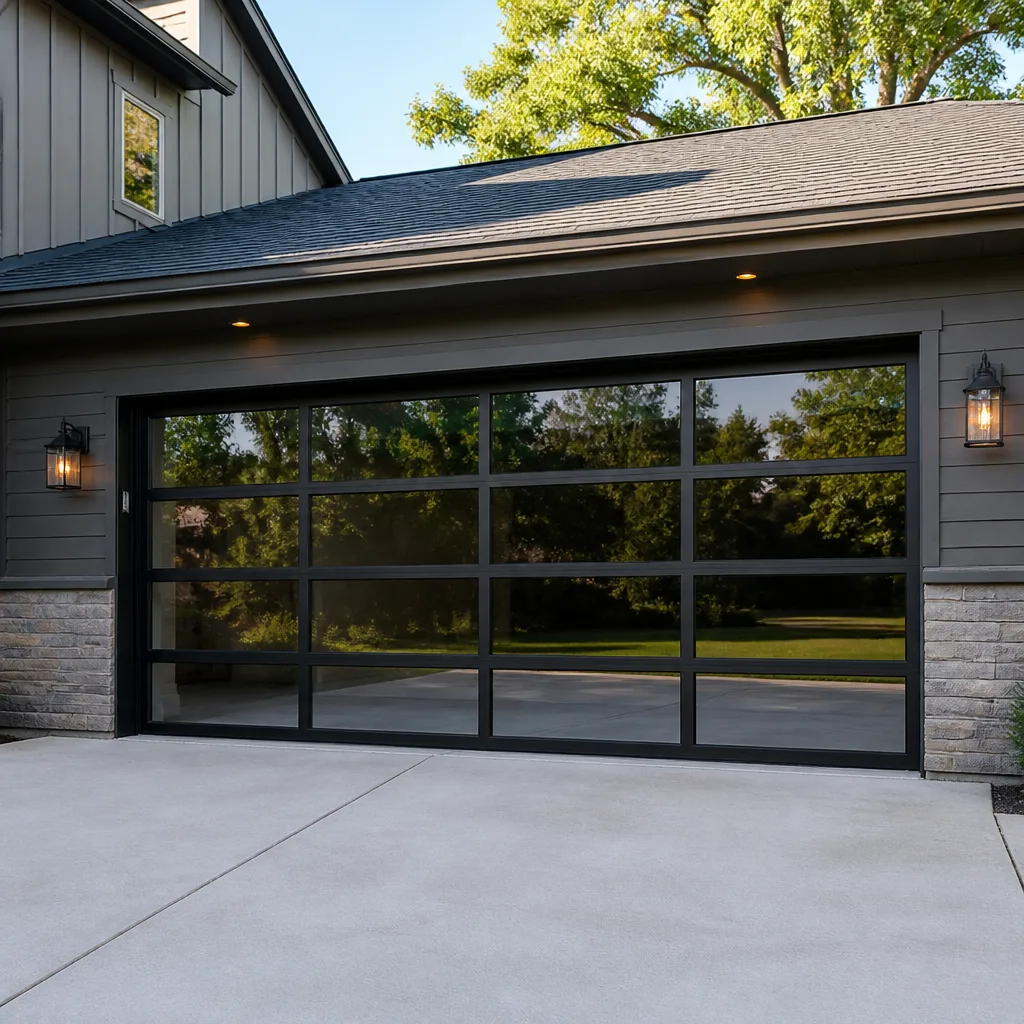 Full-view glass
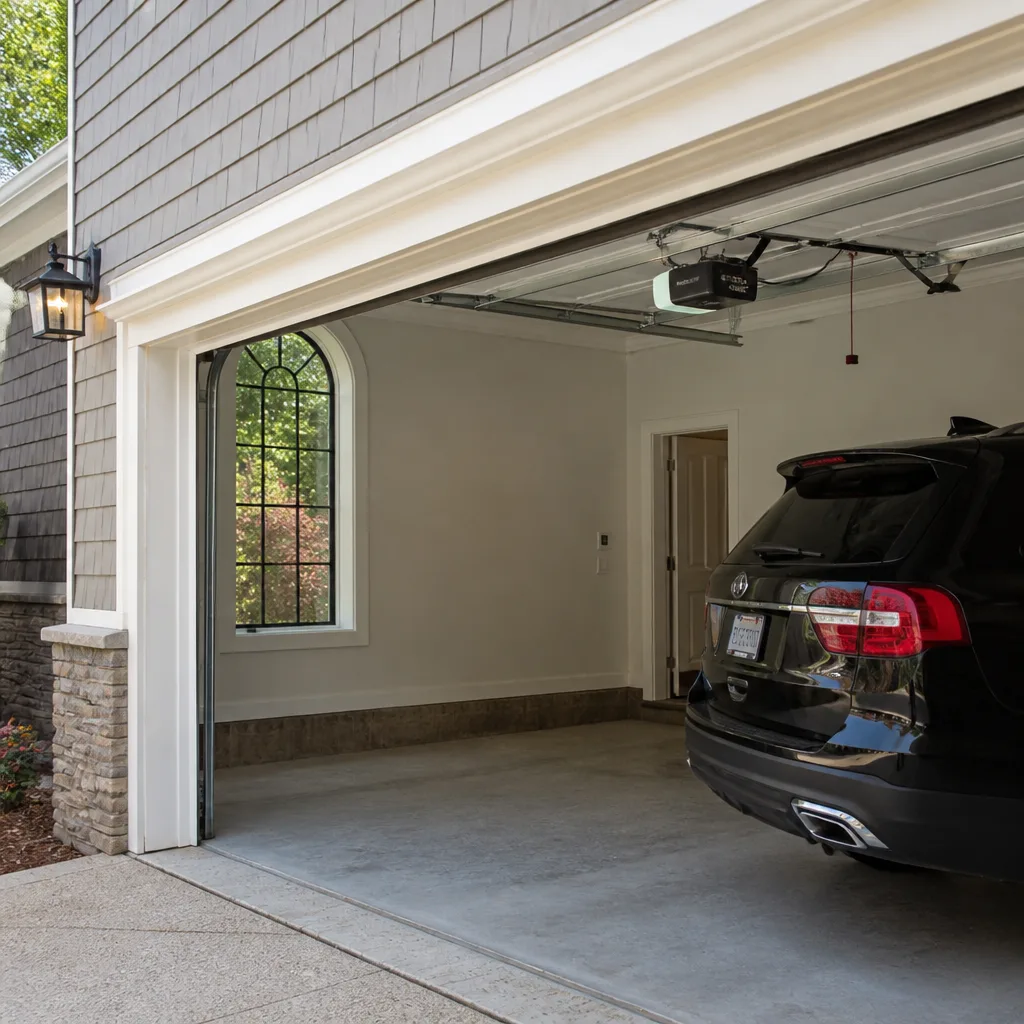 LiftMaster openers
 Chamberlain openers
Full 25-point door and opener safety check with every visit - springs, cables, rollers, tracks, and your LiftMaster or Chamberlain opener included
You get a price before we start. It does not change when the pro arrives.
Get your free estimateDIY vs Professional Garage Door: The Annapolis Homeowner’s Decision Guide
Replacing a bottom seal is a legitimate Saturday DIY job. Adjusting torsion spring tension is not. A quarter-turn miscalculation on a 200-pound door puts 150 foot-pounds of stored energy into your hands, and that’s a different category of risk rather than a different point on the same skill spectrum. Most DIY-versus-professional advice lumps every garage door task together and tells you to “know your limits,” which is useless because it never tells you where the line actually sits. This guide draws that line task by task for Annapolis homeowners. You’ll learn which jobs are safe with the right tool and twenty minutes, which ones carry injury or liability consequences that make self-repair a bad trade, and how to recognize when you’ve already crossed into professional territory before you cause the damage.
Quick Answer
Most garage door maintenance is safe to do yourself: bottom seals, lubrication, visual inspections, and tightening exposed bolts. Anything involving torsion springs, cables, or the counterweight system is a professional job, full stop, because those components store enough energy to cause serious injury. Opener electrical work sits in between and depends on your comfort with the panel and the manual. If you’re unsure which category your repair falls into, that uncertainty is itself the answer: call a pro.
Styles & brands we work with
- Raised-panel steel
- Carriage house
- Modern flush
- Full-view glass
- LiftMaster openers
- Chamberlain openers
Table of Contents
- The Task-by-Task Classification: Safe, Gray Zone, Professional Only
- The Torsion Spring Physics You Need to Understand Before Deciding
- Tools and Parts Sourcing in Annapolis: What You Can Get Locally
- Maryland Liability: What Happens to Your Insurance Claim After a DIY Failure
- The Three DIY Jobs That Look Simple and Create Expensive Callbacks
- Cost Comparison: DIY vs Professional for Each Task Type
- Brand-Specific Reality: Why Craftsman and Raynor Parts Aren’t Universal
- A Decision Framework for the Gray Zone
The Task-by-Task Classification: Safe, Gray Zone, Professional Only
Here’s the cleanest way to think about it. Garage door work splits into three buckets based on what happens if you get it wrong, not based on how mechanically inclined you are. A careful homeowner with a socket set can handle the first bucket. The third bucket will hurt you.
Safe to DIY
- Replacing the bottom weather seal. A straightforward job that doesn’t touch the counterweight system. Pull the old seal out of the retainer, slide the new one in, trim to fit.
- Lubricating hinges, rollers, and tracks. Use a proper garage door lubricant, not WD-40, on the moving metal parts.
- Tightening exposed bolts on the hinge plates and track brackets. Just don’t overtighten and strip them.
- Visual inspection. Look for fraying cables, bent tracks, worn rollers, and gaps at the bottom seal. Inspecting is always safe; it’s the repair that follows that carries risk.
- Cleaning photo-eye lenses on the safety sensors. A dirty lens is the most common reason a door reverses for no apparent reason.
- Replacing the opener’s remote batteries and re-pairing remotes. The manual walks you through it.
Gray Zone: Depends on Your Specific Door
- Adjusting the opener’s force and travel limits. Safe on a modern LiftMaster or Chamberlain with a clear digital interface. Riskier on older units where the adjustment screws are unlabeled and a wrong turn overworks the motor or defeats the safety reverse.
- Replacing a single roller or hinge. Safe if the door is fully closed and the spring tension is intact, because the door’s weight is resting on the ground. Not safe if you’re doing it with the door up.
- Reconnecting a door to the opener after a manual release. Usually simple. Occasionally the trolley needs reseating in a way that isn’t obvious.
- Straightening a slightly bent track. A minor bend at the bottom can sometimes be persuaded back with a rubber mallet. A bend higher up usually means the track needs resecuring to the frame.
Professional Only: No Exceptions
- Any torsion spring work. Adjustment, replacement, winding, unwinding. This is the single most dangerous component on the system.
- Extension spring replacement. Lower energy than torsion but still loaded, still capable of serious injury if it lets go during handling.
- Cable replacement or re-spooling. Cables are under spring tension and can whip.
- Replacing the bottom bracket or the center bearing plate. Both are tension-bearing components.
- Replacing a full section or panel on a sectional door. The panels are load-bearing in ways that aren’t obvious from the outside.
- Electrical work inside the opener housing or at the wall outlet if you’re not comfortable with the breaker. Wiring a new opener circuit belongs to someone qualified to do it.
In our experience across Annapolis, the repairs homeowners most often attempt and regret are spring replacements and cable re-spooling. Both are the jobs where a single mistake turns a repair call into an emergency call, and sometimes into an injury.
The Torsion Spring Physics You Need to Understand Before Deciding
You don’t need an engineering degree, but you do need to understand one idea: the spring isn’t helping the door, it’s holding the door’s entire weight in suspension. A typical single-car garage door weighs somewhere in the neighborhood of 130 to 200 pounds. The spring system is wound to counterbalance that weight almost exactly, which is why you can lift the door with one hand. When the spring is intact, the system is balanced. When it snaps, all of that stored energy releases at once.
What “Stored Energy” Actually Means
Winding a torsion spring is like winding a clock spring the size of your forearm. Every quarter turn adds tension. A properly wound spring holds hundreds of foot-pounds of rotational force, and it’s holding that force every second of every day, whether the door is open, closed, or somewhere in between. The energy isn’t just potential; it’s actively loaded against the winding cones and the shaft.
When a spring breaks, the release is instantaneous. A torsion spring snapping at full tension can whip the winding bar out of the cone with enough force to break a wrist or take out teeth. The door itself, suddenly unbalanced, can crash down. Cable drums can spin free and cables can whip. This is why professional spring work involves specific winding bars, specific technique, and a two-person protocol for the larger doors.
Why “Just Adjusting It” Is Not Safer
The common misconception is that adjusting spring tension is less risky than replacing a spring. It isn’t. Adjusting means partially unwinding a live spring, then rewinding it to a new position, which puts your hands and tools directly on a loaded component twice instead of once. Replacing a broken spring is actually the safer scenario, because a broken spring holds no energy. It’s the intact-but-out-of-adjustment spring that demands the most respect.
If you’ve read this far and you’re still thinking about doing it yourself, we’d ask one question: what’s the realistic amount of force you’re willing to absorb if the winding bar slips? That’s the entire risk calculation. It’s not about whether you can follow a video. It’s about whether the consequence of a mistake is worth it.
This is why we treat garage door spring repair as a core service rather than a specialty job we farm out. Spring replacement done right and done safely is the foundation of everything else on the door.
Tools and Parts Sourcing in Annapolis: What You Can Get Locally
Here’s a practical reality that DIY guides tend to skip: even when a job is technically safe to attempt, you may not be able to finish it today. Annapolis homeowners have decent access to basic hardware, but the specific parts for specific door systems aren’t always sitting on a shelf within driving distance.
What’s Readily Available
- Universal bottom seals and retainers. Most hardware and big-box stores in the Annapolis area carry these.
- Standard nylon and steel rollers. Widely available, though the quality varies.
- Universal hinges. Available, but they won’t match a specific manufacturer’s gauge.
- Garage door lubricant spray. Everywhere.
- Universal remote replacements and batteries. Common.
What Usually Isn’t Available Locally
- Brand-specific torsion springs. Springs aren’t universal. They’re matched to door weight, height, and cycle life, and a LiftMaster or Raynor door will need a specific spring spec. A hardware store won’t stock it; a special order can take days.
- Proprietary opener parts. Circuit boards, drive gears, and safety sensor harnesses for a specific Chamberlain or Genie model often come from the manufacturer or a specialty supplier.
- Matched panel sections. If a panel needs replacing, the color and profile have to match the existing door. That’s a manufacturer order, not a shelf item.
- Correct winding bars. Proper torsion winding bars are specific steel rods sized to the spring cone. Substituting a screwdriver or a piece of rebar is where a lot of DIY injuries start.
The Five-Day Problem
This is the spot DIY guides consistently miss. If your spring snaps and you order the replacement, you’re looking at a wait for delivery while your car is trapped in the garage or your home is unsecured through the open door. That’s the real cost of the DIY route: not the parts, but the days of no door. When a door fails and a car is locked in, waiting for a shipment is a losing proposition.
We keep garage door repair as a same-day option for exactly this reason. The parts exist and can be fitted in a single visit; making a homeowner wait days for a spring they could have had installed that day is not a good trade.
Maryland Liability: What Happens to Your Insurance Claim After a DIY Failure
Most homeowners don’t think about their insurance policy until something goes wrong, and garage door work is a category where the insurance question is genuinely unclear and worth understanding before you start. This isn’t legal advice, and it isn’t a warning about how terrible your coverage is; it’s the practical framework you should have in your head before you touch a spring.
What Homeowners Insurance Typically Covers – and Doesn’t
- Sudden accidental damage to the door itself. If a spring snaps and the door comes down on a car, that’s the kind of event a homeowners policy usually evaluates. Whether it’s covered depends on the specific policy.
- Injury to a person on the property. Medical payments coverage often applies, but again, the policy is the authority, not us.
- Damage caused by faulty workmanship. This is where DIY becomes complicated. Most policies exclude damage caused by poor workmanship or improper installation. If the door falls because a DIY spring installation was wrong, the insurer may argue the cause was faulty work, not sudden accident.
- Repeat visits from a failed DIY repair. Nothing in insurance covers the cost of re-doing the work.
The Practical Takeaway
Before any DIY garage door repair in Annapolis, ask yourself two questions. First, if this goes wrong and damages the door or the car, will my policy treat it as an accident or as faulty work? Second, if a person gets hurt on my property because of work I did, what does my liability coverage actually say? A quick call to your agent before the repair is worth more than any internet opinion on the topic. The code and permit requirements for garage door replacement also vary by jurisdiction, so if the job involves installing a new door or making structural changes, ask the city’s building department directly. We won’t guess at Maryland code provisions because the specifics matter and the building department is the authority.
The policy doesn’t have to make you afraid of the door. It should make you deliberate about which jobs you attempt. If you’re going to do a repair yourself, do it right, and if you’re not sure you can, don’t.
The Three DIY Jobs That Look Simple and Create Expensive Callbacks
These three come up again and again. Each one looks manageable from a video, and each one commonly ends with a homeowner on the phone with us asking how to unwind what they just did. Recognizing the warning signs before you cross the line is the point.
1. Adjusting the Opener’s Force or Travel Limits
The force adjustment on a LiftMaster or Chamberlain opener is a screw that tells the motor how hard to push before it gives up. Turn it too high and the door closes with enough force to defeat the safety reverse. Turn it too low and the door won’t complete its travel and will reverse every time. The setting interacts with the door’s spring tension, so if the springs are slightly out of adjustment, fiddling with the force screw hides the real problem and creates a new one.
The warning sign you’ve crossed the line: the door reverses or stops at a different point every time you test it. That means the opener is caught in a trying-to-compensate loop, and the fix is a diagnostic, not a screwdriver.
2. Replacing a Bottom Bracket or Roller Without Realizing the Tension
The bottom bracket looks like a simple piece of metal holding the bottom roller. It’s also the anchor point for the lift cable, which is under tension from the spring. Loosening the bottom bracket bolts on a door at rest can be fine. Doing it wrong releases the cable and, with it, the spring energy through the entire left or right side of the system.
The warning sign: the door has any noticeable gap between the bottom of the panel and the floor when fully closed, or the cables look slack on one side. That’s an unbalanced door, and the bracket work is no longer routine.
3. “Straightening” a Bent Track With the Door Up
A slightly bent track can look like a piece of metal that just needs a persuasive whack. It is that, except that if you do the persuading with the door in the raised position, the door is riding in a track that’s carrying its weight. A track that suddenly lets go drops the door. Doing the same adjustment with the door closed and the tension intact from the springs is a different job entirely.
The warning sign: the bend is above the first set of hinges, or the door won’t sit flat in the track after the adjustment. Either of those means the track is no longer perpendicular to the wall and needs proper resecuring.
Cost Comparison: DIY vs Professional for Each Task Type
The cost picture is less about the money than people expect. Do-it-yourself parts are often cheaper, but the difference is smaller than the risk gap, and it flips entirely when a DIY job goes wrong. Here’s the honest breakdown by task type.
Where DIY Usually Wins on Cost
- Bottom seal replacement. A universal seal runs a modest amount at a local store, and there’s no realistic downside if you install it straight.
- Lubrication and adjustment of exposed hardware. The cost is one can of lubricant.
- Battery replacement and remote re-pairing. Trivial.
Where the Cost Gap Narrows Fast
- Roller and hinge swaps. Universal parts are cheap, but the correct-gauge parts for a Raynor or Clopay door cost more than the sale-bin universal set, and the fit matters.
- Opener diagnosis. A DIY guess replaces a part that may not have been the problem. Two wrong parts later, you’ve spent more than the diagnostic.
- Track straightening. A mallet is free, but a bent track that pulls loose and damages the door is not.
Where DIY Is a False Economy
Spring replacement, cable replacement, and any electrical work inside the opener housing. The parts are inexpensive; the consequence of a wrong install is not. We strongly recommend a written estimate before you start ordering parts for any of these. Free estimates and an upfront written price mean you know your true cost before you pick up a tool, and the price is quoted and agreed before any work starts.
Brand-Specific Reality: Why Craftsman and Raynor Parts Aren’t Universal
A recurring frustration in Annapolis is the homeowner who’s bought an aftermarket part because it was “for garage doors” and found it doesn’t fit their specific door. Garage door hardware is brand-specific and often model-specific, and treating it as universal leads to stripped screws, misaligned rollers, and doors that bind.
Door Hardware Brands
- Clopay and Amarr have their own panel profiles, hinge gauge, and spring specs. A universal bottom seal may fit one and not the other.
- Wayne Dalton and Raynor each use their own track profiles and bracket designs. A “generic” roller on a Raynor hinge plate often introduces a wobble that didn’t exist before.
- Craftsman doors (the door side, not the opener) used specific hinge assemblies over the years and matching a replacement to the model year is not always straightforward.
Opener Brands
- LiftMaster and Chamberlain share parentage but not parts; a circuit board or gear set from one will not fit the other’s drive type.
- Genie and Craftsman have their own screw-drive and belt-drive geometries, and diagnosing a failure by circuit board and drive type is what professionals do.
This is why the “we don’t service that brand” dead end is so common. A generalist handyman may know enough to try, but not enough to source the right part for a specific Raynor or Craftsman door. We work on eight major brands so that call doesn’t dead-end: LiftMaster, Chamberlain, Genie, Clopay, Amarr, Wayne Dalton, Craftsman, and Raynor. If your opener is a Chamberlain that’s failed its circuit board, or your door is a Clopay with a snapped spring, one call covers the whole system. That includes garage door opener repair and the diagnosis that goes with it, which is where brand fluency actually saves time.
A Decision Framework for the Gray Zone
For the jobs that fall between the two clear buckets, here’s a short decision path you can run in your head. Work through these in order and stop at the first “no.”
- Does the repair touch a loaded component? Springs, cables, the bottom bracket, the center bearing plate. If yes, it’s a professional job.
- Does the repair require the door to be open or partially open? If yes, the spring tension is active and the door’s weight is in the track. That’s different from working on a fully closed door resting on the ground.
- Do you have the correct part for your exact brand and model? Not “a part that looks similar.” The exact one. If it requires a multi-day order, weigh that against the time without a working door.
- Can you test the repair safely afterward? The full test is opening and closing the door under the opener’s control and confirming the safety reverse. If you can’t test it that way, don’t start it.
- Is the repair going to hide a bigger problem? Force adjustments, travel limit changes, and track tweaks often mask spring wear. If the door has been sluggish or noisy for a while, the actual fix is a diagnostic, not a tweak.
- If it goes wrong, will you know? Some errors are invisible until the next use. Spring and cable mistakes are visible immediately, which is why professionals take them seriously. A wrong hinge is invisible until the door starts binding.
If any of those answers point away from DIY, that’s the whole answer. There’s no shame in it; it’s the same call any professional makes on their own door.
Common Mistakes to Avoid
- Using the wrong lubricant on the tracks. Grease and WD-40 attract grit and gum up the rollers. Garage door lubricant is what belongs on the moving metal, and the tracks themselves only need it sparingly. In a humid Annapolis summer, that grit turns into a grinding paste faster than you’d expect.
- Adjusting the opener force setting to compensate for a weak spring. This hides the real problem, wears out the opener faster, and defeats the safety reverse. If the door is heavy, the springs are the fix.
- Winding a spring without proper winding bars. Screwdrivers, rebar, and pipe sections are what injuries are made of. A proper winding bar is specific steel sized to the cone; nothing else is a substitute.
- Assuming a bottom seal is universal. Seal profiles vary by door manufacturer, and a seal that “sort of” fits leaves gaps that let in rain and pests. Annapolis’s wet winters are exactly when that gap shows up as water on the garage floor.
- Ignoring the safety sensor at the bottom of the track. A misaligned or dirty photo eye is the most common cause of a door that won’t stay closed. Before you call for service, check the lens and realignment; it takes thirty seconds.
- Ordering the “one-size” hinge set for a specific brand door. Universal hinges strip out on Clopay and Raynor doors because the gauge is different. Match the part to the door.
- Replacing a spring yourself the day it snaps while the car is trapped inside. This is the scenario most likely to cause injury, because the urgency pushes the process. If the car needs out, a professional can have the door open and the spring replaced without a days-long wait.
See the difference
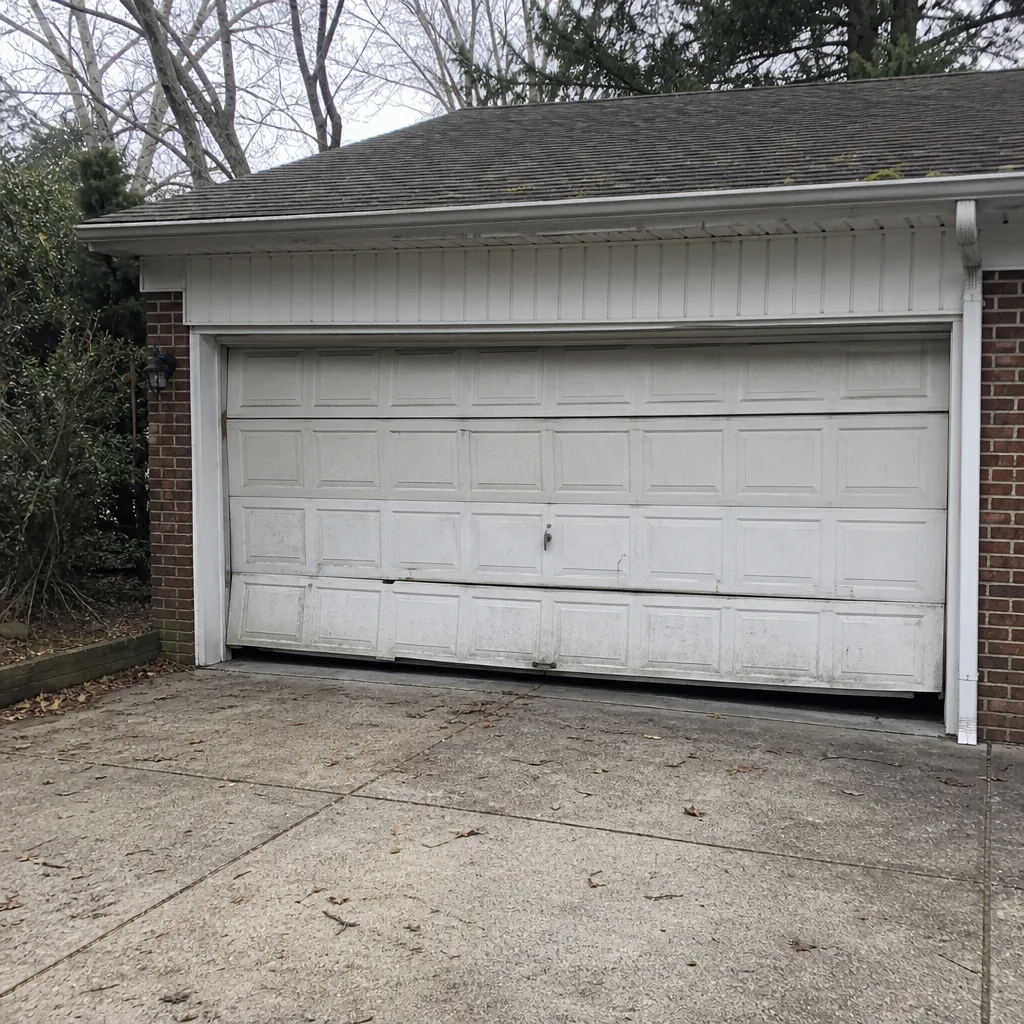 Before
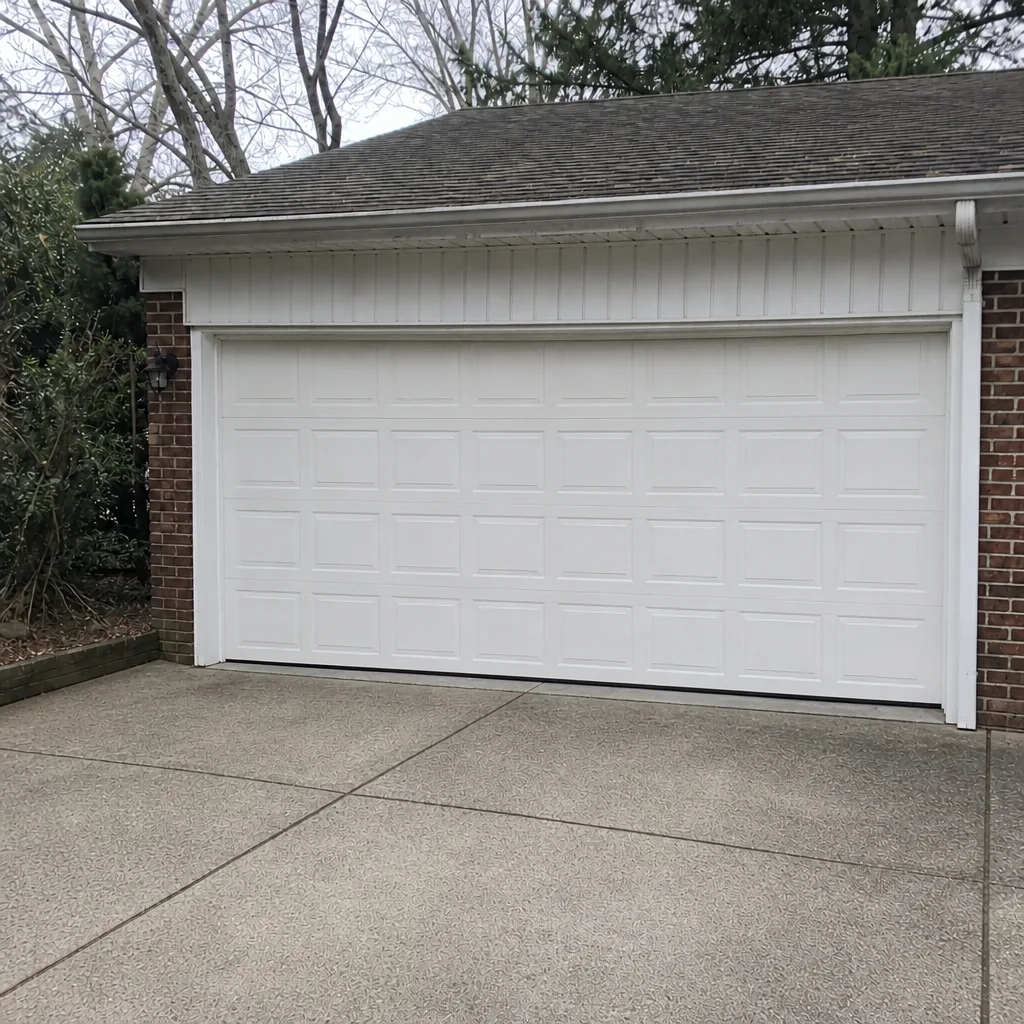 After
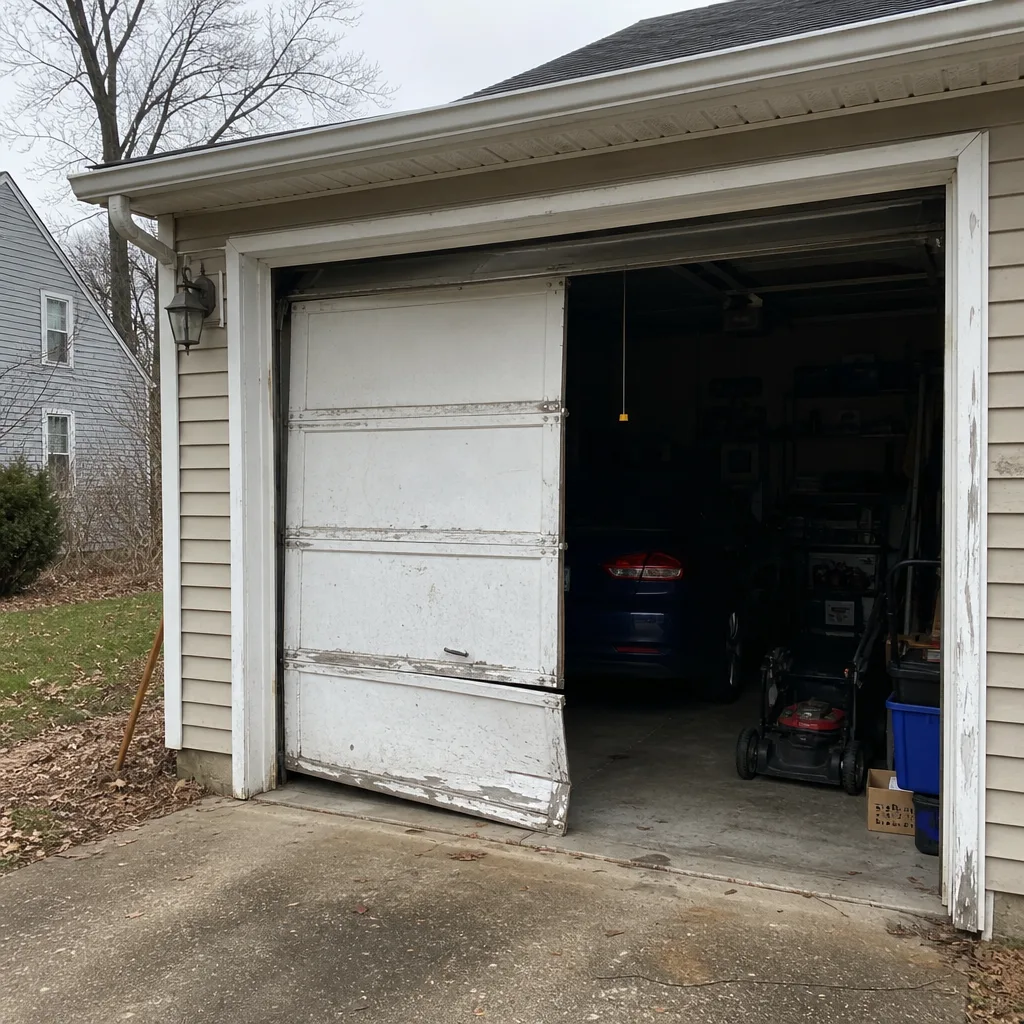 Before
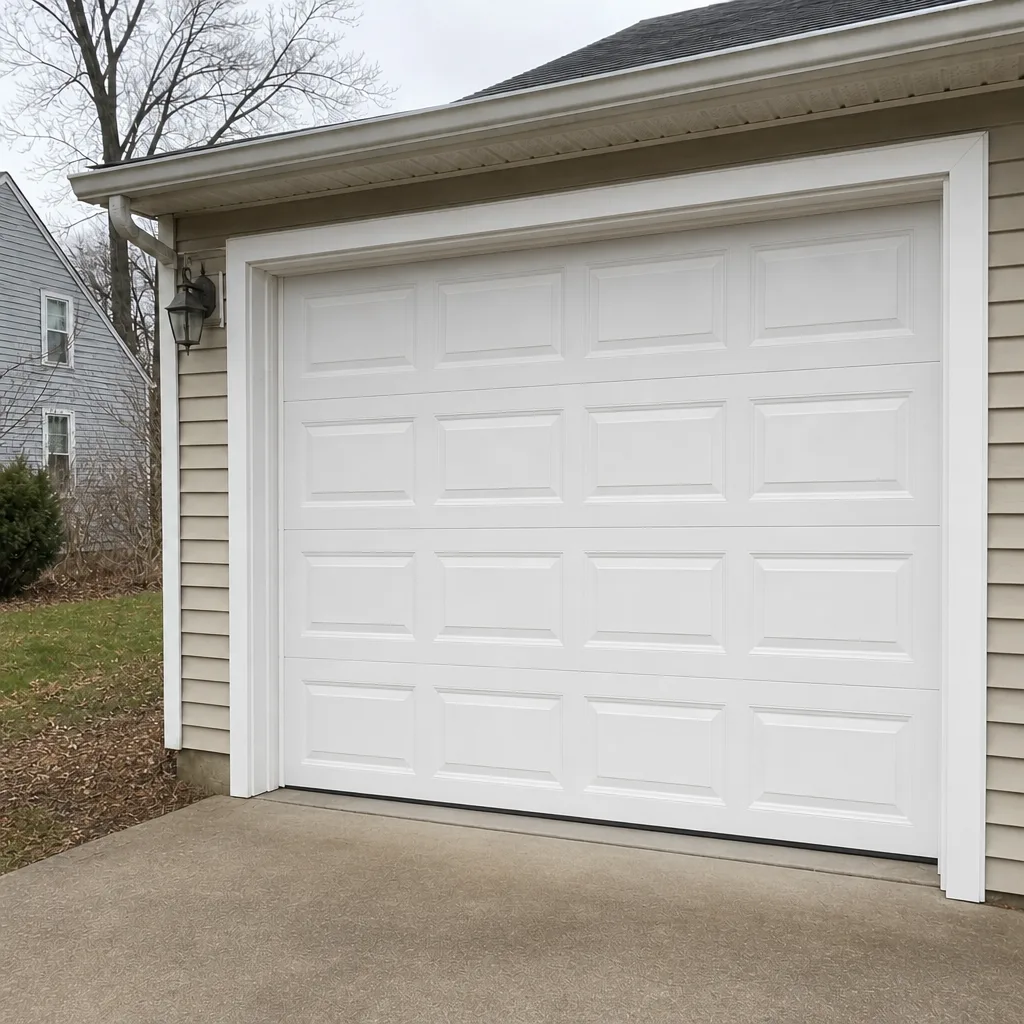 After
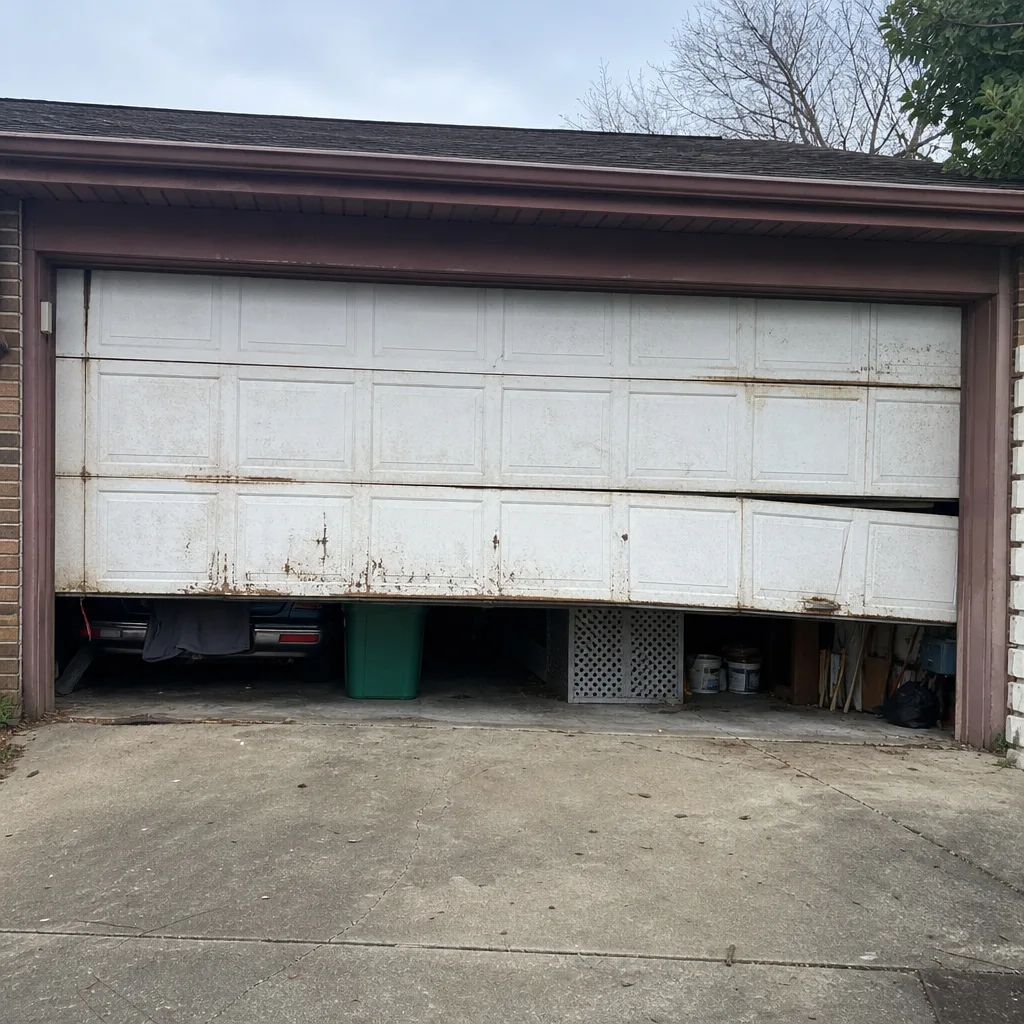 Before
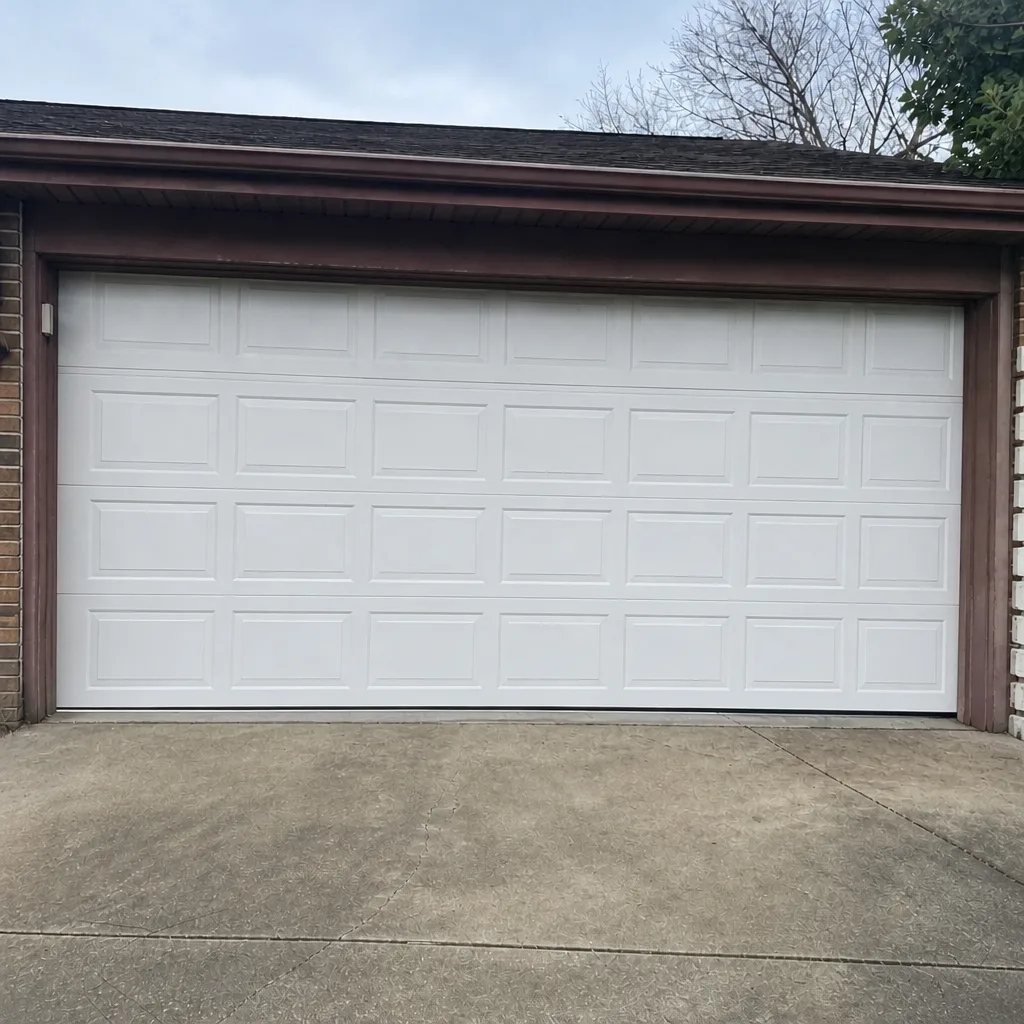 After
When to Call a Professional
Call a professional the moment the repair involves a spring, a cable, a bottom bracket, or the center bearing plate. Call us if the door has slammed, if the opener has started reversing unpredictably, or if the door won’t open at all and the car is trapped inside. Call if you’ve started a repair and realized the part is wrong or the door isn’t sitting the way it did before. Call if the door is due for full replacement rather than repair. Annapolis Garage Door Repair offers free estimates in Annapolis. Call (844) 976-0297. We answer 24/7. Fast dispatch from 7am to 7pm, Sunday through Friday.
Frequently Asked Questions
Yes, for maintenance-level tasks: bottom seals, lubrication, visual inspections, exposed bolt tightening, and remote re-pairing. Those are the jobs where a careful homeowner with the right tool and twenty minutes comes out ahead. Anything touching the spring or cable system is a professional job without exception.
No. A torsion spring stores enough energy to cause serious injury if the winding bar slips or the spring releases unexpectedly, and the videos don’t transmit the feel of loaded tension that a trained technician uses to stay safe. This is one of the small number of jobs where “careful” doesn’t change the risk category. Spring replacement is work for someone trained on the specific door system. Call (844) 976-0297 for a free estimate.
Typical pricing for a single spring replacement runs in the range you’d expect for a same-day professional service call, and a matched pair is usually replaced together at roughly twice the single-spring figure. The written estimate sets the final price, and there’s no charge for the estimate itself. Call (844) 976-0297 for an exact quote.
It depends entirely on the policy and how the damage is classified. Sudden accidental damage and damage from faulty workmanship are treated very differently by most insurers, and a DIY repair that fails often falls into the second category. Ask your insurance agent before you start the repair rather than after; that’s the only reliable answer.
Yes. A snapped spring leaving the door stuck is a same-day repair scenario, and the door can be safely opened to free the car before the spring is replaced. This is a common call in Annapolis, and it’s one reason we offer emergency service as a standing, named offering rather than a vague promise. Call (844) 976-0297 and we’ll get the car out and the spring fixed.
Permit requirements for garage door replacement vary, and the city’s building department is the authority on what applies to your specific address. Some replacements require a permit and some don’t, depending on the scope and whether the door is part of a permitted structure. Ask the building department directly before starting a full replacement, and if you’re working with us on an Annapolis Garage Door Repair install, we’ll walk through what the department typically asks for on the project.
The Bottom Line
The DIY-versus-professional question is about consequence, not skill. Bottom seals, lubrication, inspections, and exposed hardware are fair game; a careful homeowner saves money and time on every one of them. Springs, cables, and anything load-bearing are not, and it’s not because you can’t follow a video. It’s because a physics mistake there doesn’t forgive. Tools and parts sourcing in Annapolis makes the gray zone harder than it looks: the right part for a specific Chamberlain or Raynor door often isn’t local, and the wait matters when the car is trapped. Insurance and permits add a layer you shouldn’t guess at. The class of task decides the answer. When in doubt, the doubt is the answer.
If you’ve reached the point in the decision where you need an exact number, we can help. Call (844) 976-0297 for a free estimate on garage door spring repair, on garage door opener repair, or on a full replacement. Our technicians have up to 10 years of experience, we work across LiftMaster, Chamberlain, Genie, Clopay, Amarr, Wayne Dalton, Craftsman, and Raynor, and the price is quoted and agreed before any work starts. We answer 24/7. Fast dispatch from 7am to 7pm, Sunday through Friday.
Written by the team at Annapolis Garage Door Repair.